Technology
Sustainability
People
Private Area
EN
EN
What is a PCBA?
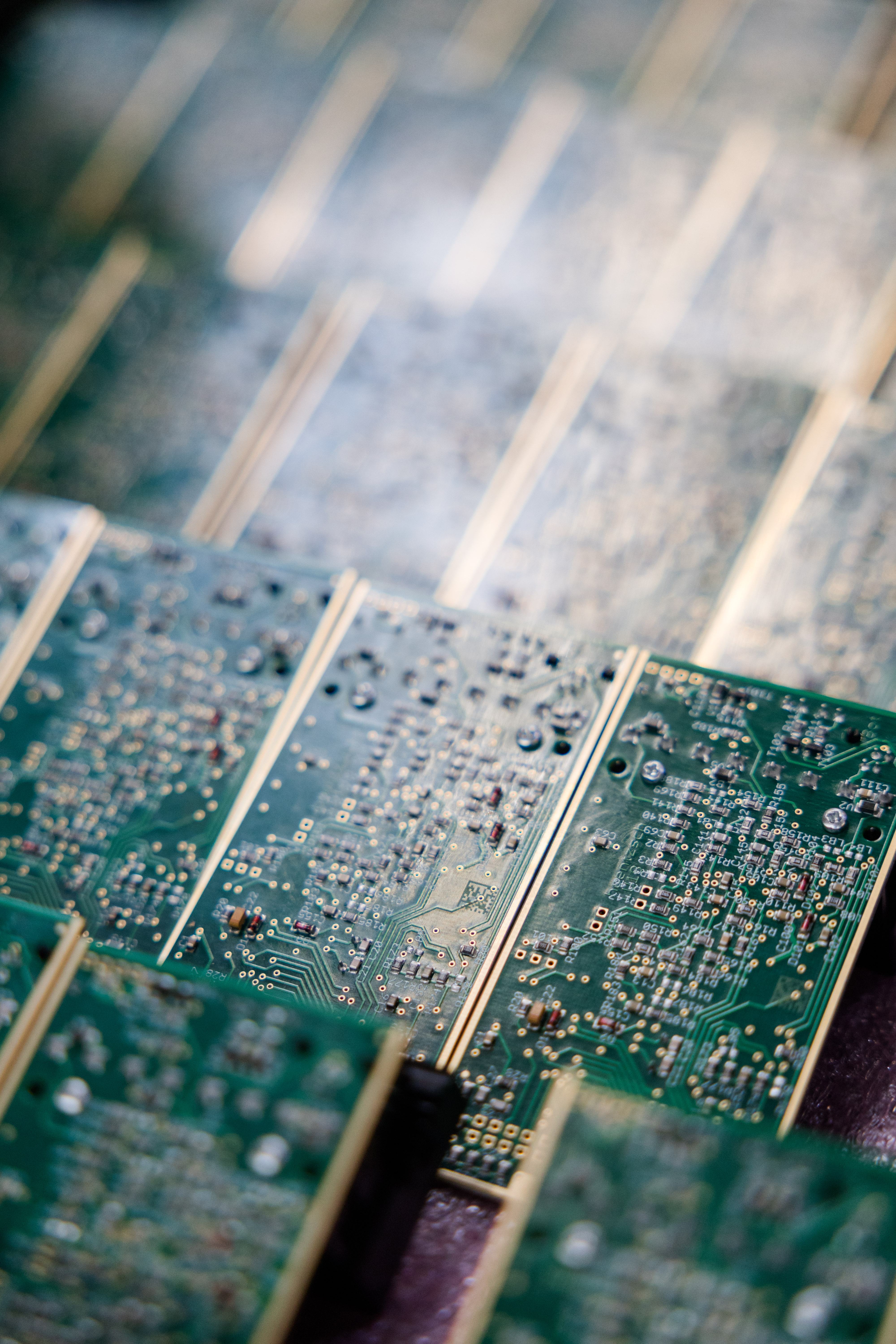
PCBA stands for Printed Circuit Board Assembly.
A PCB is a printed circuit board without all its components assembled. A PCBA is that same board after electronic components have been mounted and the soldering, inspection and testing processes have been completed. At this stage, the board evolves from a physical support structure into a functional electronic module.
In many products, the PCBA is at the heart of the system. It can be found in telecommunications equipment, automotive systems, medical devices, lighting solutions, industrial electronics and general-purpose electronic equipment.
What you need to know
Definition:
A PCBA is a printed circuit board assembled with electronic components.
Who is it for?
It is intended for companies that have a PCB design and want to turn it into a functional, testable electronic product ready for the market.
What problem does it solve?
It transforms a bare circuit board into an assembled and inspected electronic unit, ready for testing, integration or production.
HFA’s capabilities:
At HFA, we develop PCBA prototypes, support the industrialisation process and provide advanced manufacturing services, including SMT and THT assembly, inspection, testing and complementary protection and finishing processes.
Next steps:
Before manufacturing a PCBA, it is essential to validate the technical files, bill of materials (BOM), Gerber files, pick-and-place data, testing requirements, acceptance criteria and manufacturing conditions.
PCB vs PCBA: what is the difference?
The difference is simple, but highly important.
A PCB is a printed circuit board. It contains tracks, pads, vias and layers that enable electrical connections between components.
A PCBA is an assembled PCB. In other words, it is a PCB fitted with components such as resistors, capacitors, connectors, integrated circuits, microcontrollers, sensors or communication modules.
In summary:
PCB: a printed circuit board without any assembled components.
PCBA: a printed circuit board with the required components mounted and soldered onto their respective pads.
This distinction is important because many product issues do not arise during PCB design, but during the transition from PCB to PCBA. These may include soldering, assembly, test accessibility, component orientation, cleaning, protection and reliability.
How is a PCBA manufactured?
The PCBA manufacturing process depends on the complexity of the product, the components used and its quality requirements. However, it typically involves several technical stages.
The process begins with an analysis of the manufacturing files. This includes checking the BOM, Gerber files, pick-and-place data, panelisation, footprints, soldering requirements and test plan.
The assembly stage follows. For SMT boards, solder paste is applied to the PCB pads, SMD components are placed automatically and the board passes through a reflow oven. Where THT components are required, they may be inserted automatically or manually and soldered using wave, selective or manual soldering processes.
Inspection and testing are then carried out. Depending on the product, these processes may include AOI, SPI, X-ray inspection, ICT, FCT, JTAG, RF, Ethernet and environmental testing, among other methods.
At HFA, our advanced manufacturing capabilities include automated SMT assembly, THT assembly, solder paste printing, PCB cleaning, conformal coating, potting, encapsulation, 3D AOI, 3D SPI and X-ray inspection.
Why is the PCBA stage critical?
The PCBA stage is critical because it turns an electronic design into a physical product. It is where the design meets the industrial manufacturing process.
Even small decisions can have a significant impact:
Components placed too close together can make assembly more difficult or fail to meet the minimum electrical clearance required for the product to operate correctly.
Incorrect footprints can lead to soldering defects.
A lack of test points can reduce test coverage.
Poor component selection can create supply chain risks.
Environmental requirements may call for conformal coating, potting or encapsulation.
A lack of DFM analysis can result in additional rework and delays.
For this reason, PCBA should not be viewed simply as the assembly of electronic components. It should be regarded as a critical stage of technical, industrial and functional validation.
What should you prepare before requesting PCBA manufacturing?
For a faster and more effective assessment, it is advisable to provide:
Gerber files;
an up-to-date bill of materials (BOM);
a pick-and-place file;
the PCB design;
assembly requirements;
testing requirements;
firmware, where applicable;
acceptance criteria;
expected production volumes;
traceability requirements;
industry-specific standards or requirements.
The more complete and accurate the initial technical information, the more efficient the industrialisation assessment will be.
FAQ
Does HFA produce PCBA prototypes?
Yes. HFA’s laboratory is equipped for PCBA prototyping and features a controlled environment, ISO Class 6 and ISO Class 8 cleanrooms, a UV room, automated printing, series-production-quality assembly, PCB prototyping and inspection, testing and analysis systems.
Does HFA manufacture PCBAs in high volumes?
Yes. HFA’s SMT and THT assembly lines are equipped to handle high production volumes and complex technical requirements.
What tests can be performed on a PCBA?
Depending on the product, testing methods may include ICT, FCT, burn-in, JTAG, Ethernet, RF, electrical and optical transmission testing, and environmental testing. HFA provides these solutions as part of its Advanced Manufacturing and Industrialisation services.
Can a PCBA include both SMT and THT components?
Yes. Many PCBAs use mixed technology, combining SMT and THT components. HFA provides automated SMT assembly, as well as both automated and manual THT assembly.

Contact us
Ready to get started?
Contact us today to clarify any questions about our offerings and services.
Where we are
Estrada da Zona Industrial, nº 337
3750-403, Águeda – PORTUGAL
Phone
+351 234 612 680
+351 234 612 689
(Call to the national landline network)
Newsletter
Awards & Certifications

Phone
+351 234 612 680
+351 234 612 689
(Call to the national landline network)
Awards &
Certifications

